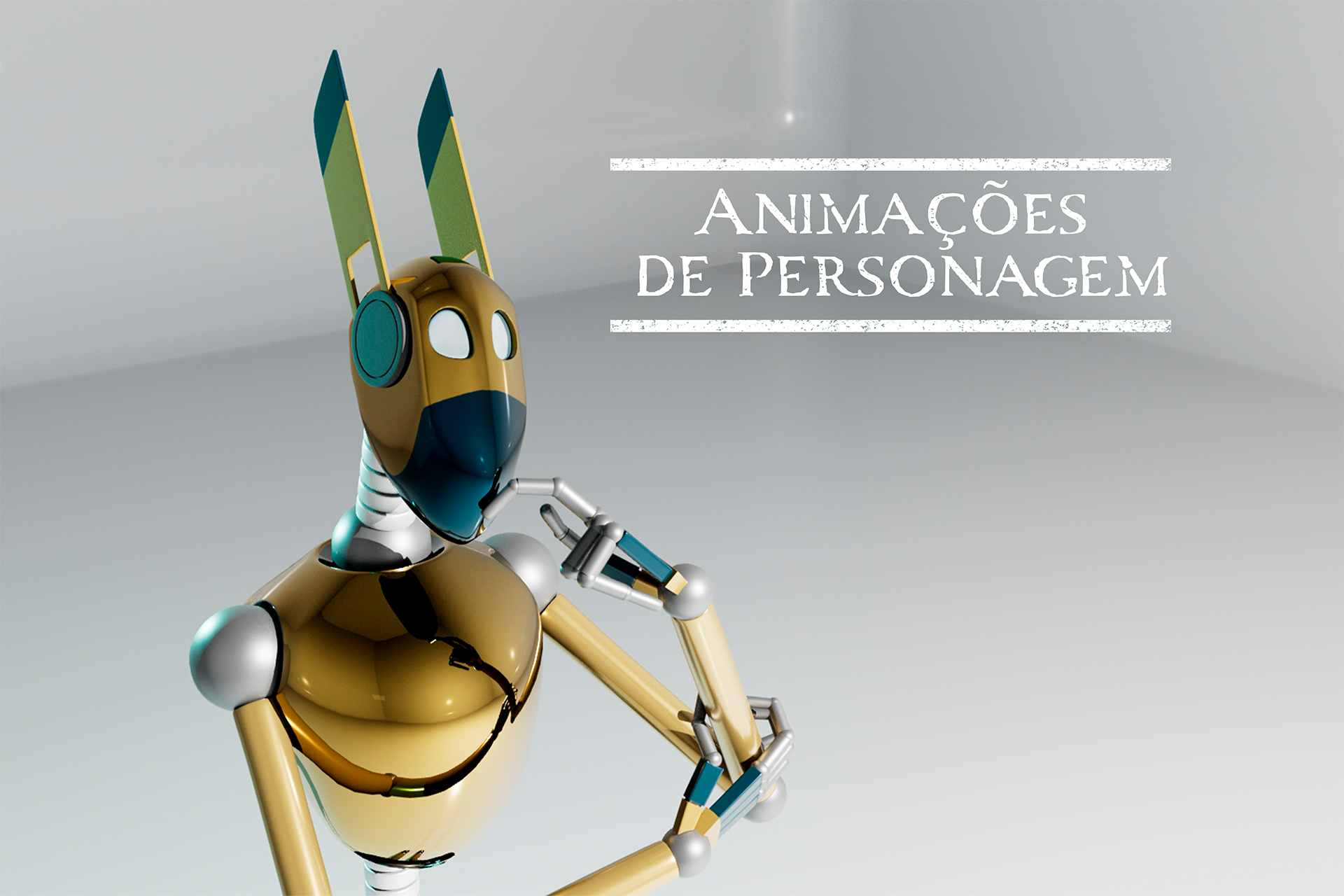
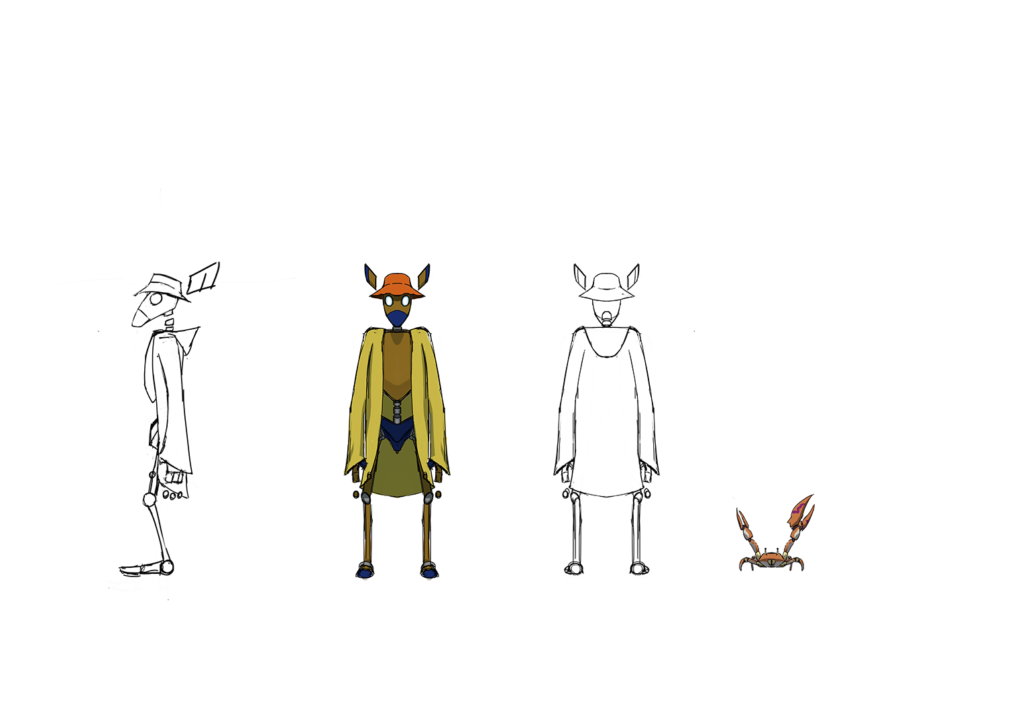
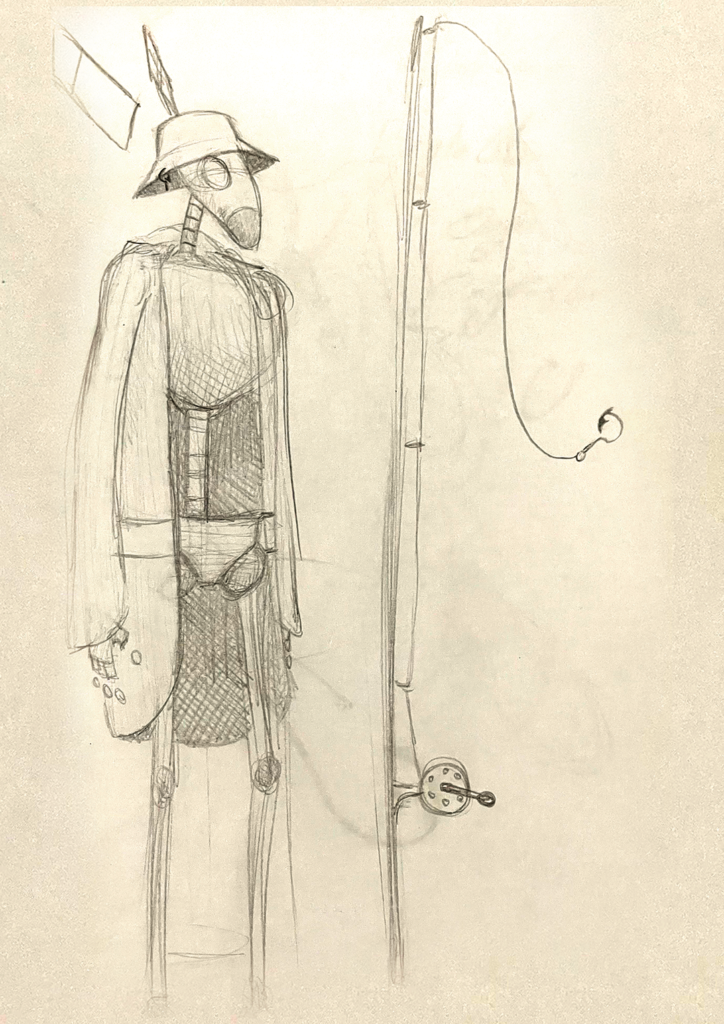
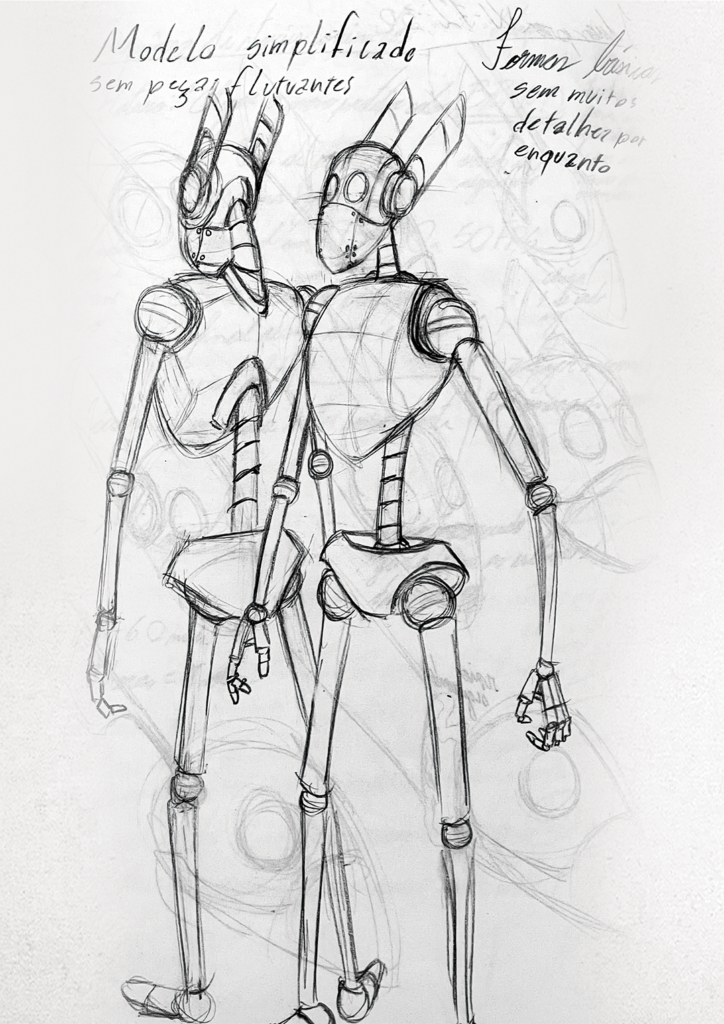
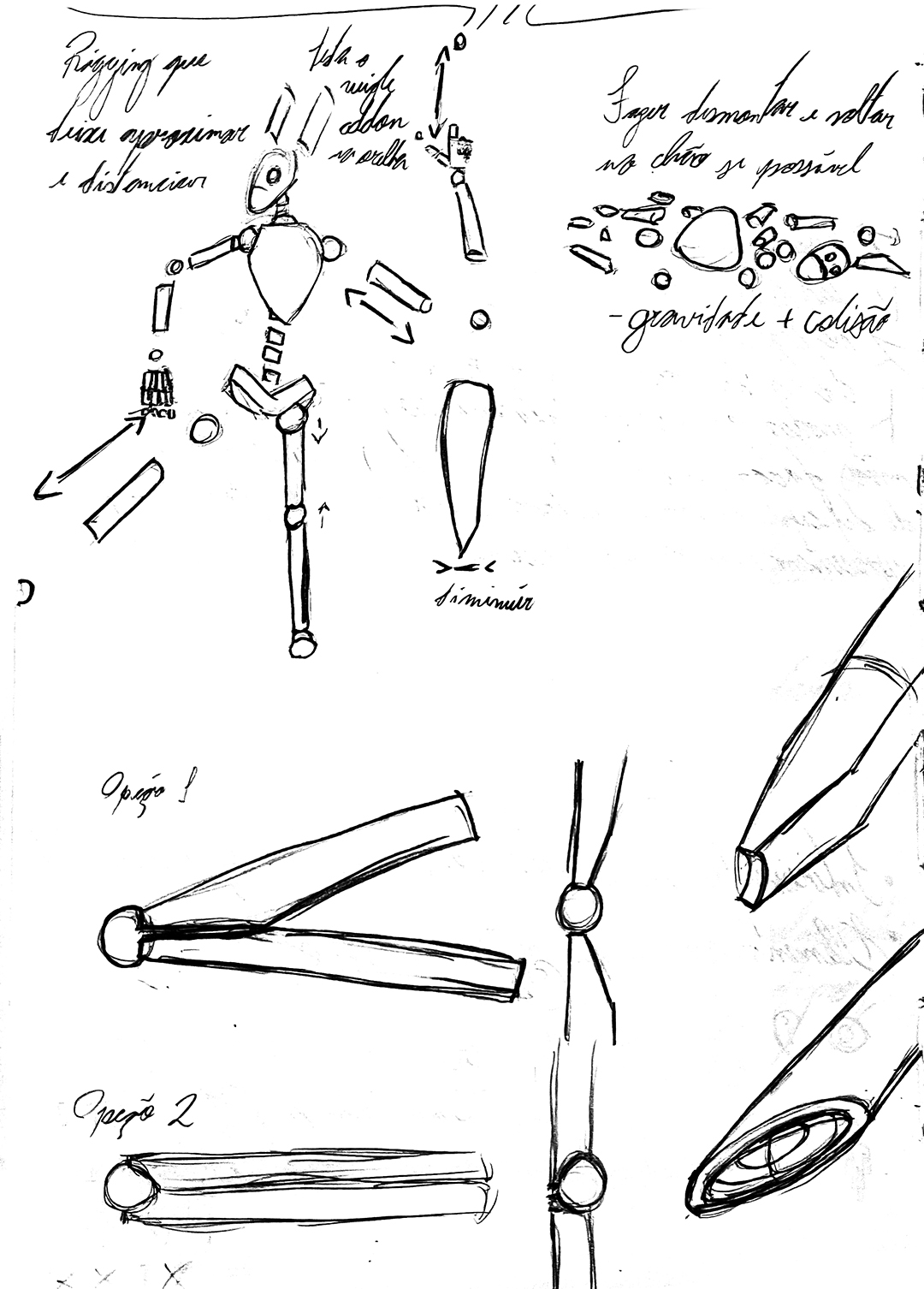
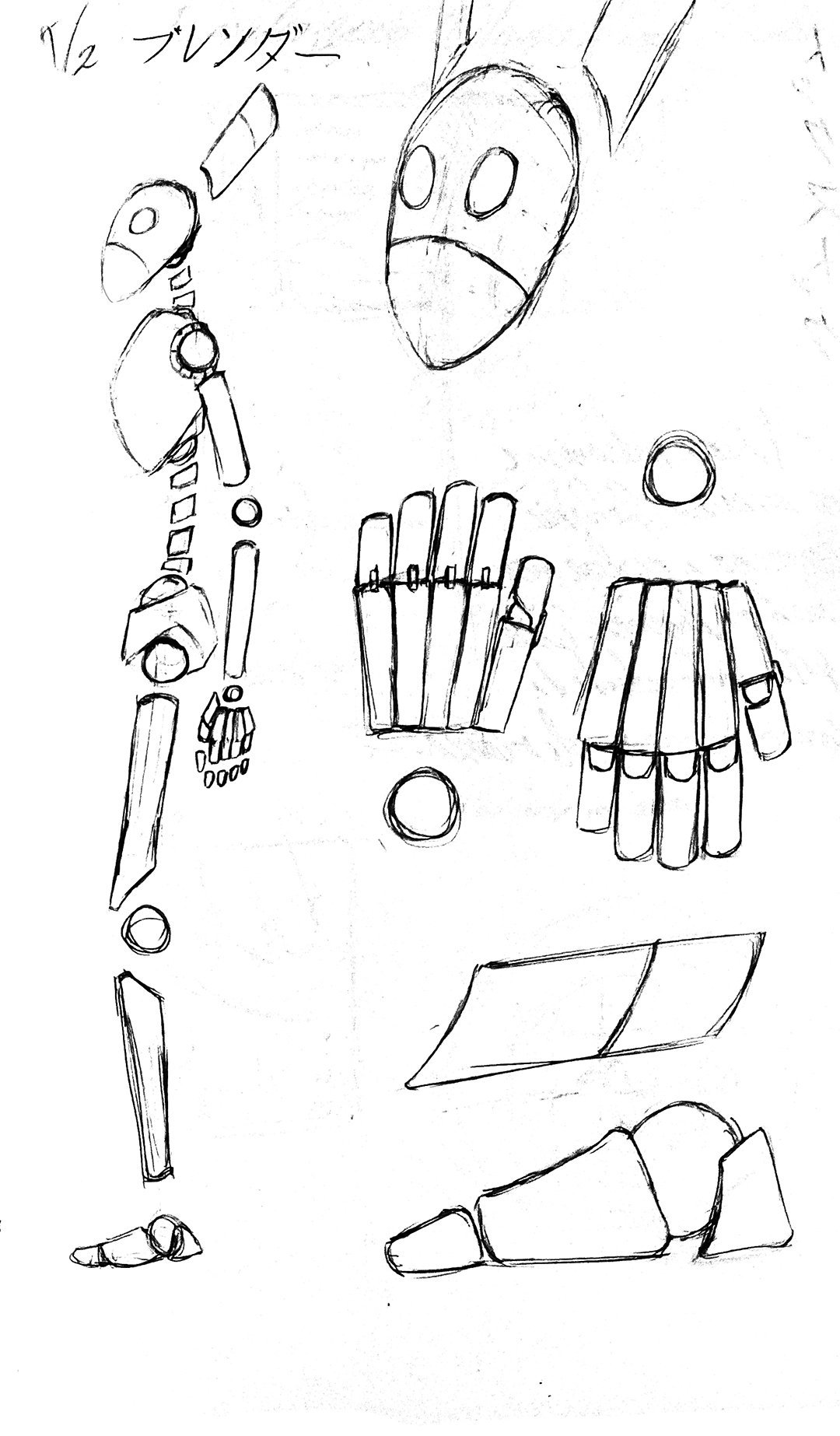
When I was ten years old, I created a character to practice drawing. Since then, I have used the same character in various projects. Occasionally, I make new illustrations of this character as a way to measure how much I have progressed in my drawing techniques. When I started animating, I also used this character often. Because it is segmented, it helps a lot with imagining movements, and it is a character I am already familiar with.
2D animation
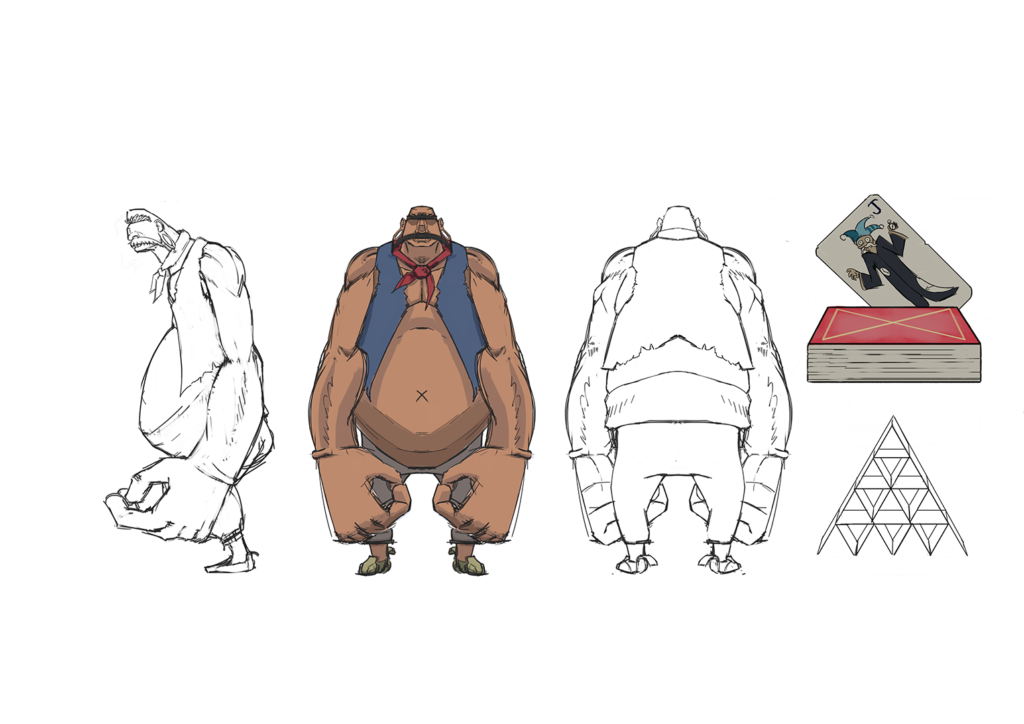
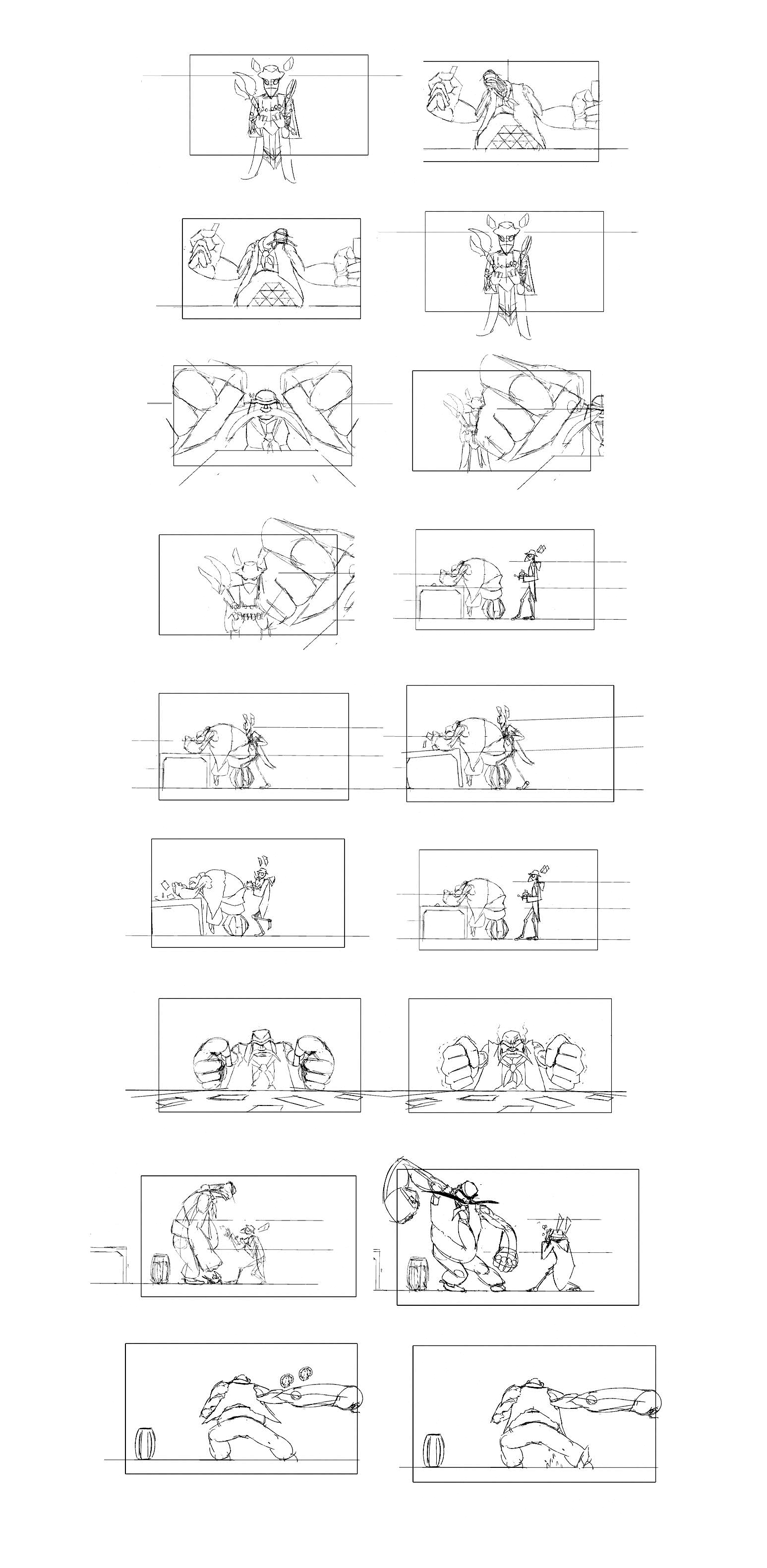
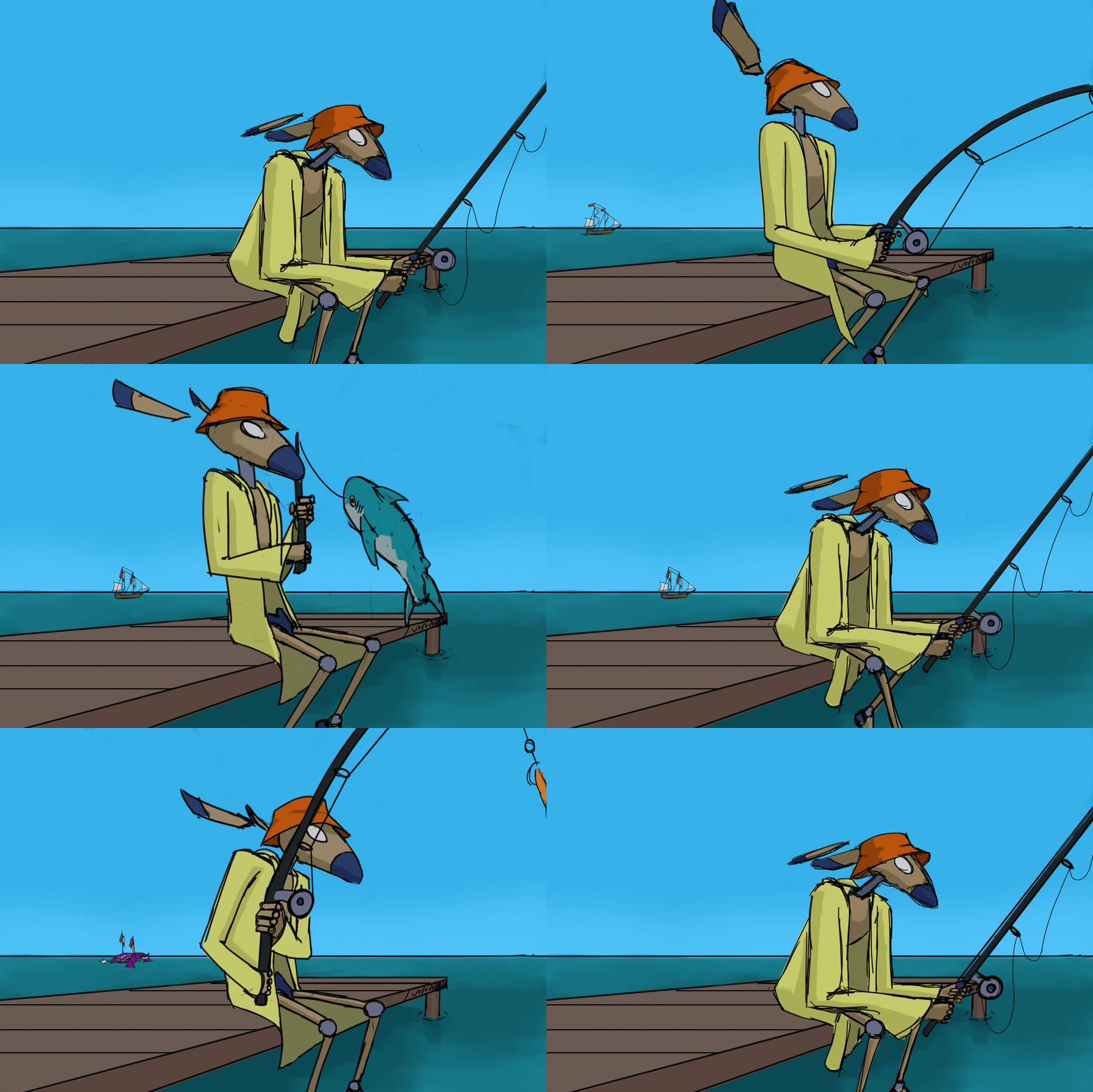
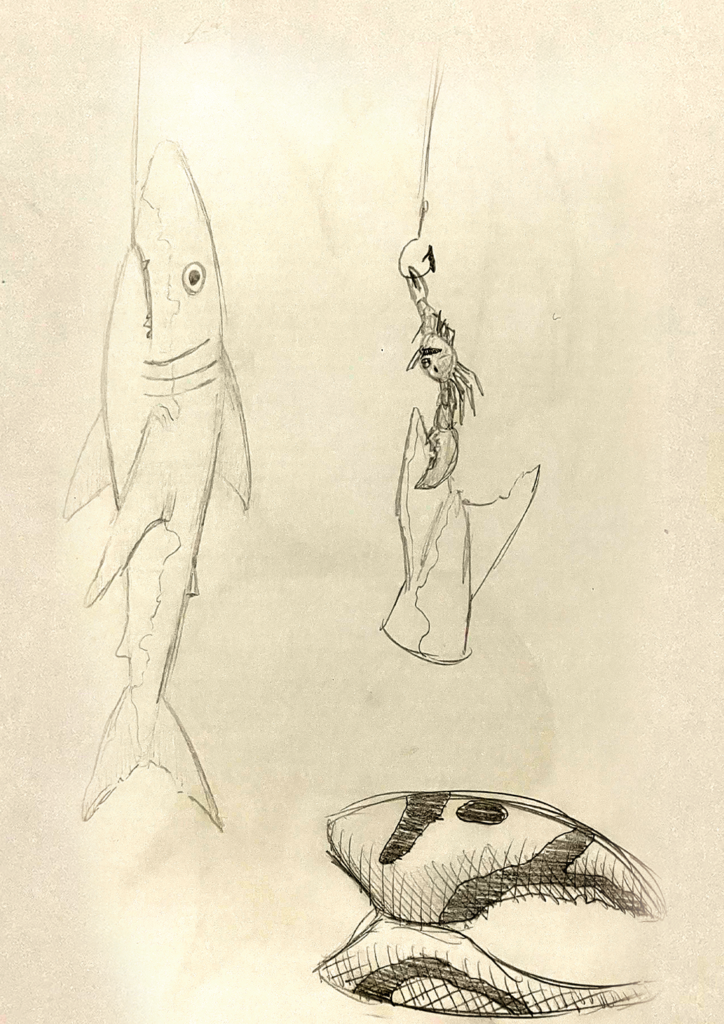
I used this character for the final project of a 2D animation elective I took in college. The assignment was to produce a 2D animation that told a narrative and was at least 10 seconds long. I did all the preparation for the animation, which included writing the script character sheet, storyboard and animatic. I shared my ideas with my professor, Henrique Sobral, who helped me with the technical aspects of the project.
2D animation loop
One of the assignments in college was to make a simple 2D animation, frame by frame. I wanted to make a looped animation with a character and a background. I sketched in my notebook what the characters would look like and then created the animation. I made a storyboard and from there I skecthed the animation and refined it until the deadline.
3D animation
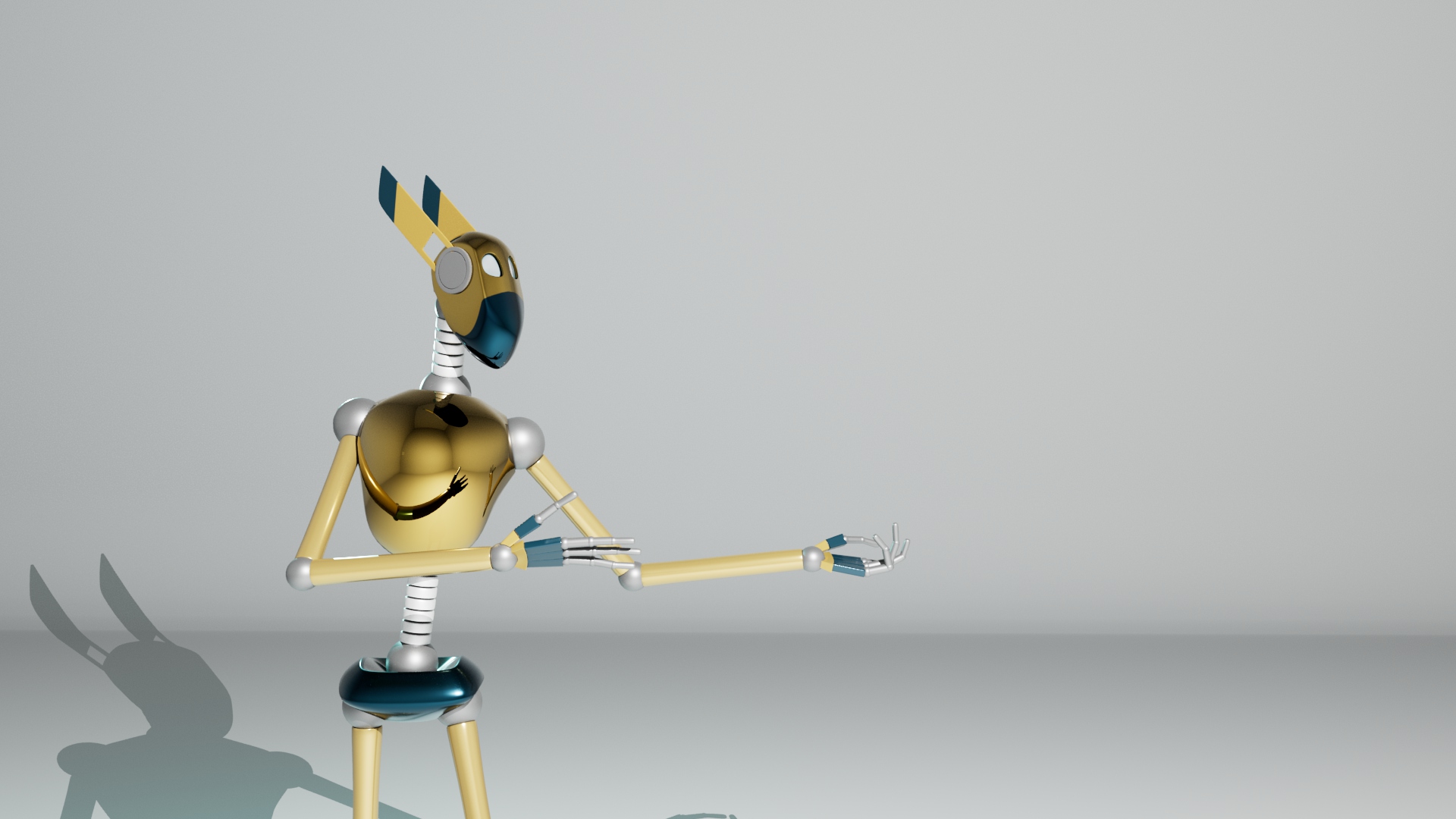
In my fifth semester, I had a modeling and 3D animation discipline. One of the assignments was to model a character, then texture and animate it.
I adapted my character design by sketching it in my notebook and then moved on to modeling. Once the character was modeled, I painted the textures, giving different materials to different parts of the model. After modeling and making a simple rigging for the character, the last step was to animate and render it.
Rigging
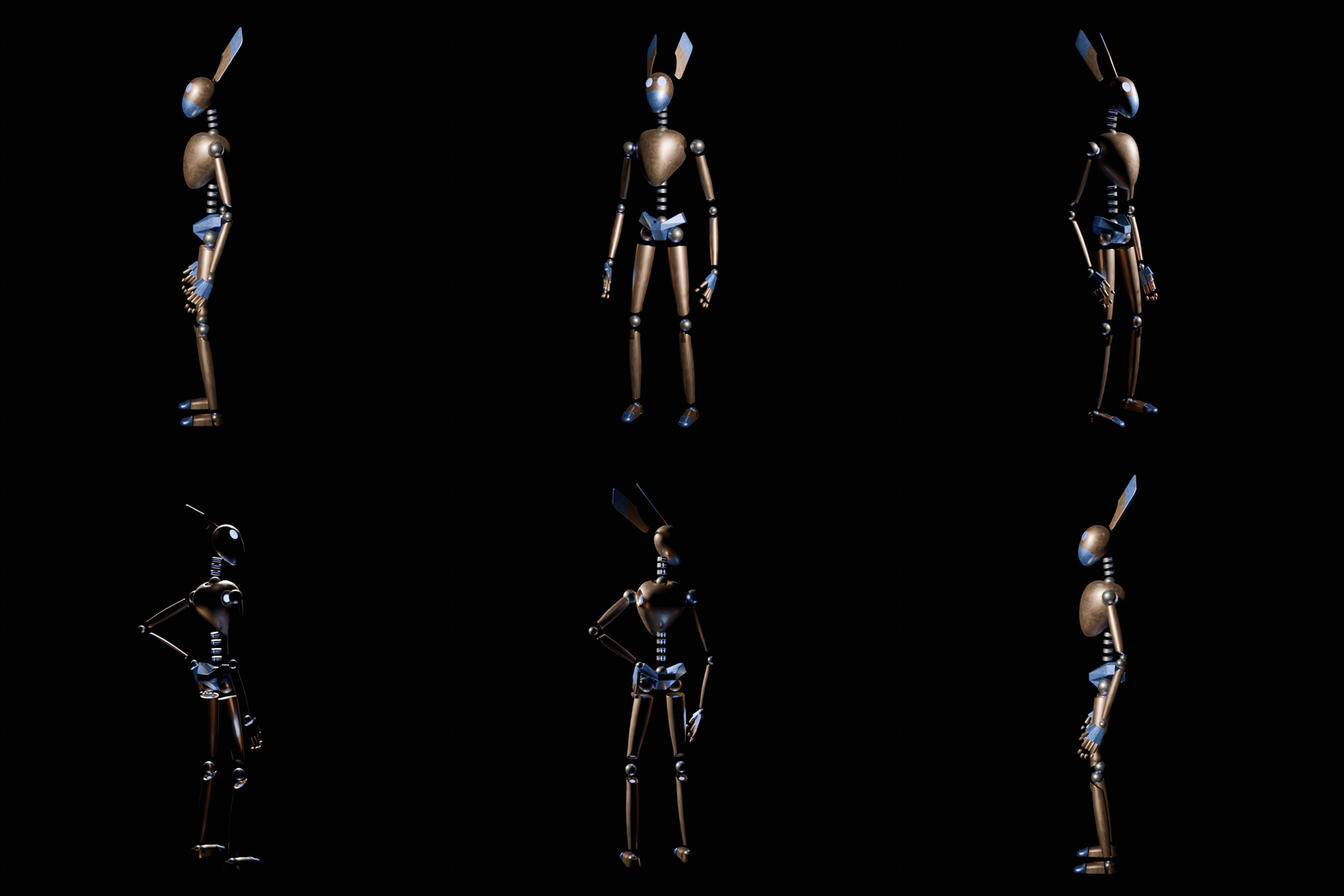
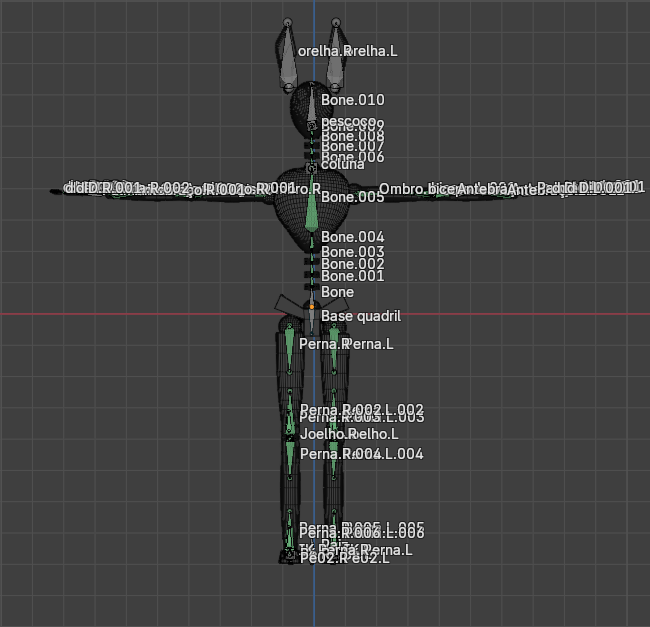
After taking the 3D animation course, I felt inspired to study rigging during my vacation. I chose to use Blender since it is the software I am most familiar with. I decided to use the same character again, but this time, since it was a personal project, I remodeled it into a version that I liked better. The new version emphasized the idea of being made of separate rigid pieces, which allowed me to experiment more with textures, create more movements, and build a more complex skeleton.
With the new design, I was able to study the basics of rigging and understand how a humanoid skeleton is built in 3D. To increase the complexity, I also added new functionalities for animation that the previous version didn’t have. The two main features I challenged myself to implement were: the ability to stretch the arms and legs while keeping equal spacing between the pieces, and making the ears have a slight delay to follow the movement of the head.